
From an idea to a PCB order in a day and a half
I recently watched a video by The 203X Uplink in which Claude Code works as a small engineering department.
One session acts as the manager and hands work to individual AI agents. Between them they design a cordless vacuum cleaner as a team.
I wanted to try the same thing with a product I might build and sell.
So I set up my own team. Using the basic model explained in the video a created my own engineering plugin for Claude Code with a manager and seven specialist agents, covering product design, electronics, firmware, mechanical design, certification, production and marketing. The manager gives each agent a written task and checks the output. Every agent has to report whether something was tested or assumed. Agents can't order parts or spend money (yet).
The first product I tested this is RADAR-PLAY, a musical instrument you play by moving your hands above radar sensors. My first prototype was two small radar boards placed about 20 cm apart, plugged into my Mac. Software on the Mac turns the height of each hand into notes, and Logic Pro plays them. There is a short video of it here.
It works, but it has rough edges and it needs a computer. I wanted the next prototype to be a self-contained instrument and MIDI controller.
My notes went back to June and were spread across project folders, old AI conversations and some to-do lists. The manager scanned these old docs and wrote a summary of what had been tried, what worked and what I had already bought. Then it proposed a plan. I changed the sensor design and approved it, and several agents started work at the same time.
Each sensor is a small separate device that plugs into the main box with an ordinary LAN cable. USing LAN cable might seem an unusual choice but it provides 8 wires and cables and connectors follow standards similar to USB.
The firmware agent repurposed the original software onto the new chips and checked that it plays like the original.
The certification agent found the Japanese radio certification for the wireless module.
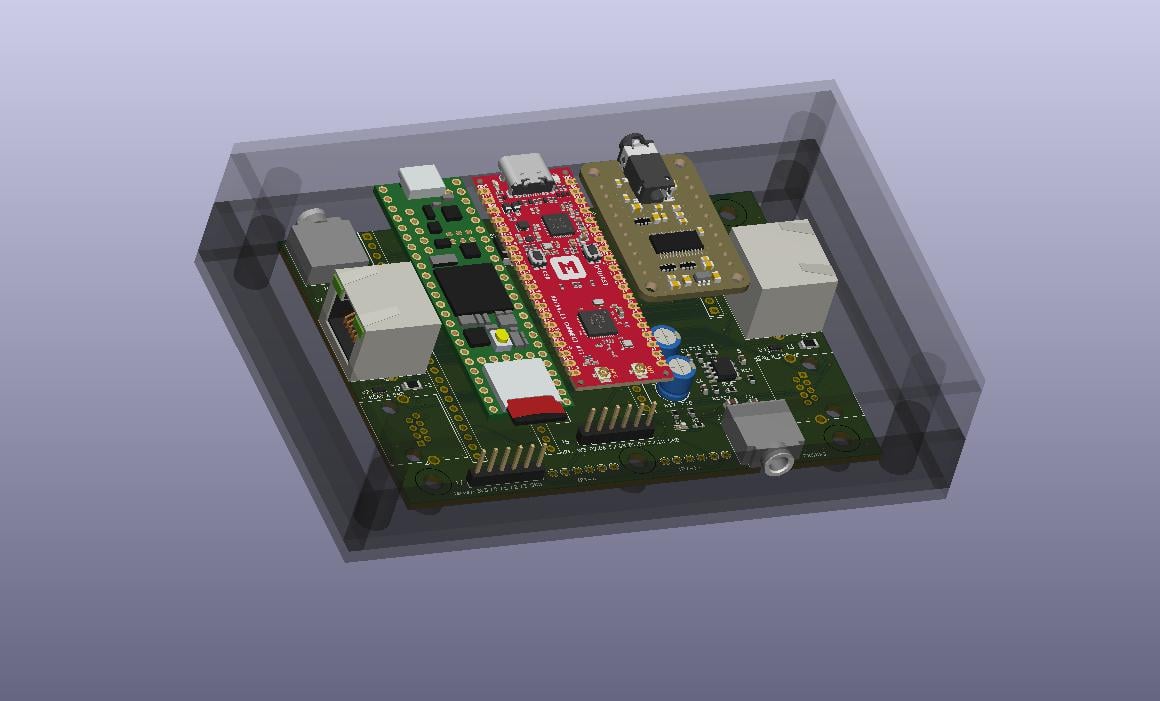
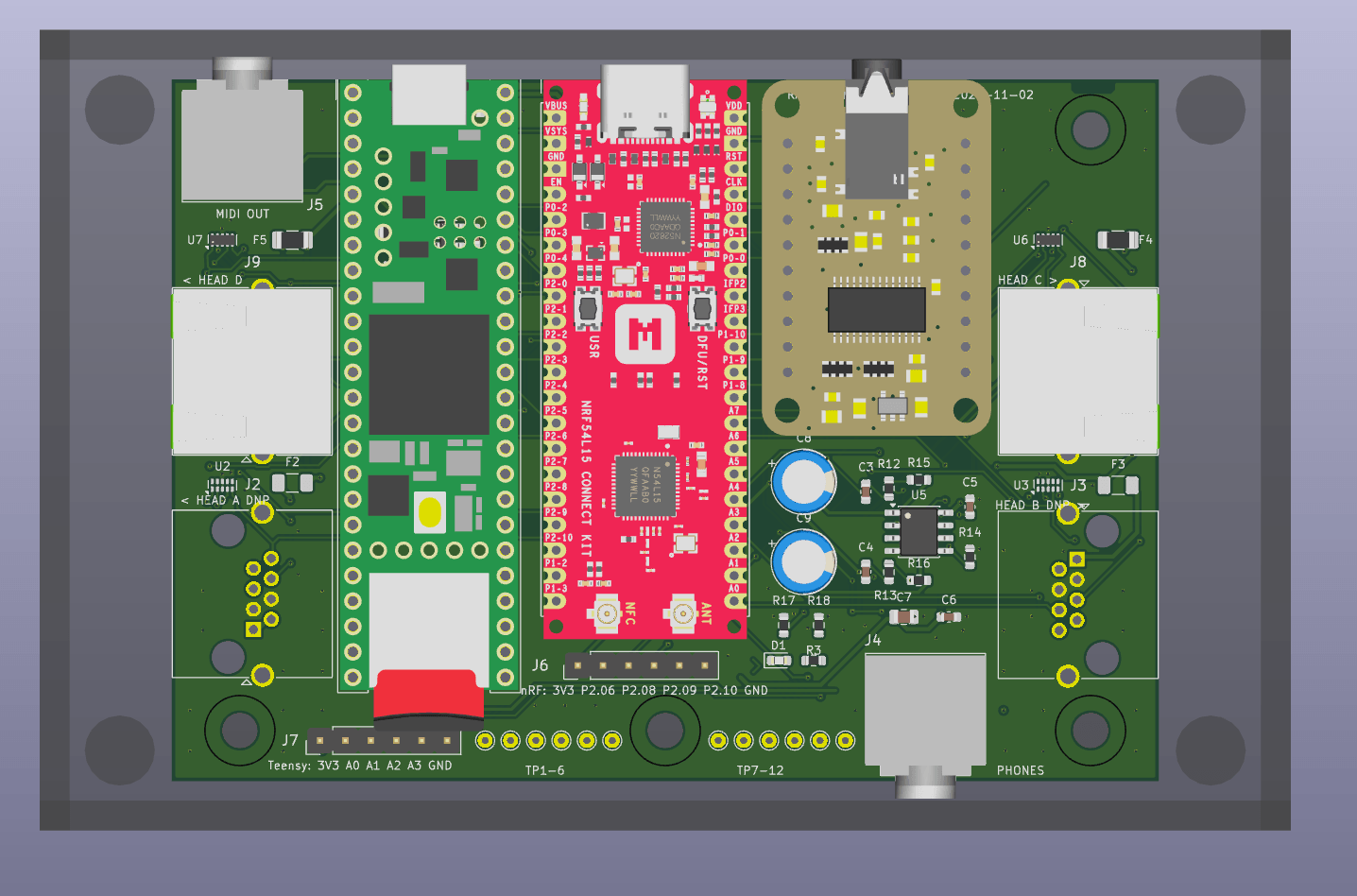
The electronics agent designed the circuit board that connects everything: the main processor, a small synthesiser board, an audio converter, sockets for up to four sensors, a MIDI out and a headphone jack.
For now it goes in a standard Takachi case. The agent checked the board against the case, and I made a few changes of my own in KiCad.
Adding 3D models including the case allowed me to check the overall layout and make sure the openings were not blocked. I also changed the initial design to move the headphone plug to the front (something I personally care about).
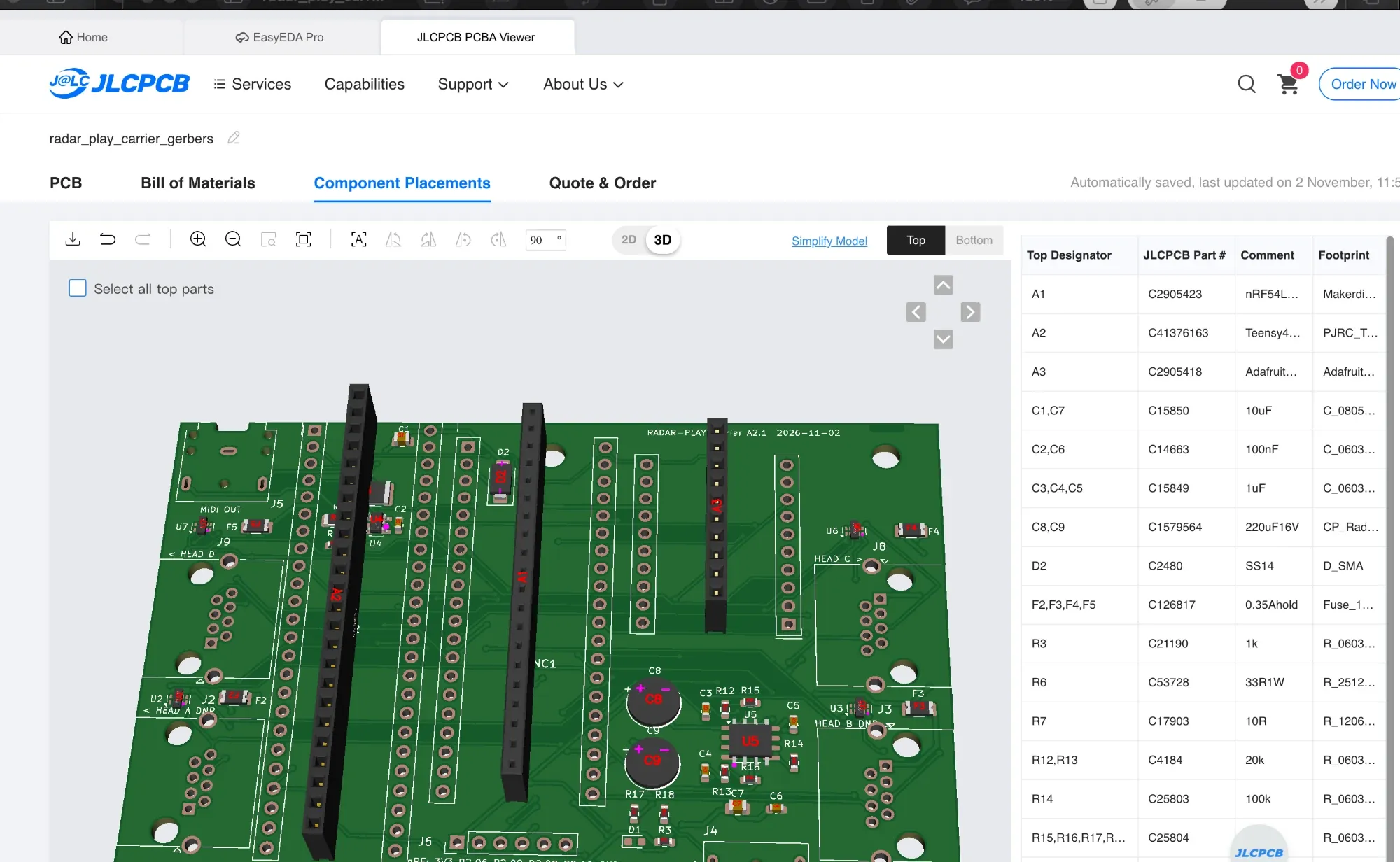
Befoe noon on the second day I placed an order for the boards from JLCPCB, using their assembly service. From the first prompt to the order took about a day and a half, across four Claude Pro sessions. It cost about U$100 (14,000 yen) for 5 PCBs and 3 assembled devices.
None of it has run on real hardware yet. When the boards arrive I will find out if it works.
コメント
まだコメントはありません。最初のコメントを書いてみませんか。